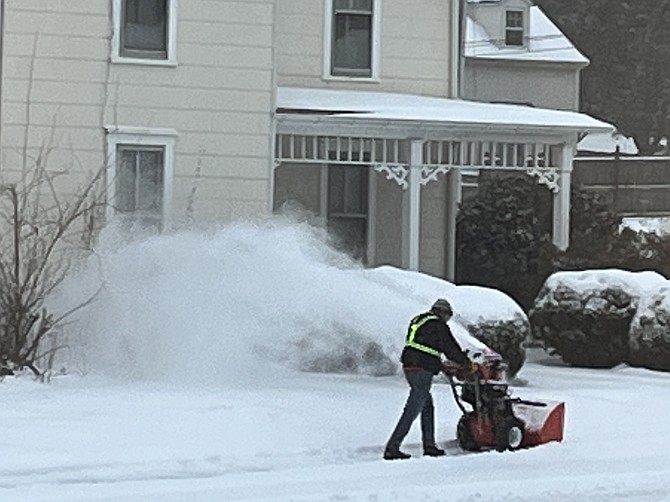
Day 1, Jan. 25: A Town of Herndon resident uses a snowblower to clear a sidewalk for his neighbors Sunday, Jan. 25. Sleet was just beginning to fall as the region transitioned from snow to historic ice storm.
Winter Storm Fern officially began late Saturday evening, Jan. 24, with the arrival of a few flakes of snow while residents slept. The active storm day followed on Sunday, Jan. 25, bringing heavy accumulation before the precipitation ended Monday morning, Jan. 26. While the snow and sleet stopped falling at that time, the storm transitioned into a weeklong deep freeze that continues to impact the region. As of Monday, Feb. 2. The frigid weather is bringing challenges and opportunities to Fairfax County residents that they normally do not encounter, such as blasting "ice-crete" with a pickax and walking across frozen bodies of water.
On Jan. 25, 2026, the storm dumped up to 4 inches of sleet in the Herndon-Vienna area, the highest single-storm sleet total for the D.C. region since February 1994, according to the National Weather Service, creating hazardous conditions. Unlike most storms that melt slightly during the day, as of 9 a.m. Feb. 2, Dulles International Airport had recorded more than 150 consecutive hours of subfreezing temperatures. This prevents the initial “slush” phase of the storm from draining, bonding it to the pavement as a solid sheet.
While primary roads are mostly passable, neighborhood streets, sidewalks and Fairfax County Public Schools’ 45,000 bus stops remain largely blocked by frozen mounds. The school system remained closed through Feb. 2, the sixth day of closure for the storm. For some students it is physically impossible to reach bus stops safely because sidewalks cannot be shoveled.
Winter Storm Fern is in the company of the most legendary winters in Northern Virginia history. Past record-setters include the 2010 "Snowmageddon" blizzard, which closed schools for eight days; the Blizzard of 1996, which resulted in a seven-to-eight-day closure; and the 2016 blizzard (Jonas), which kept students home for six days. As of Feb. 2, the closure for Winter Storm Fern has reached six days for students in Fairfax County Public Schools.
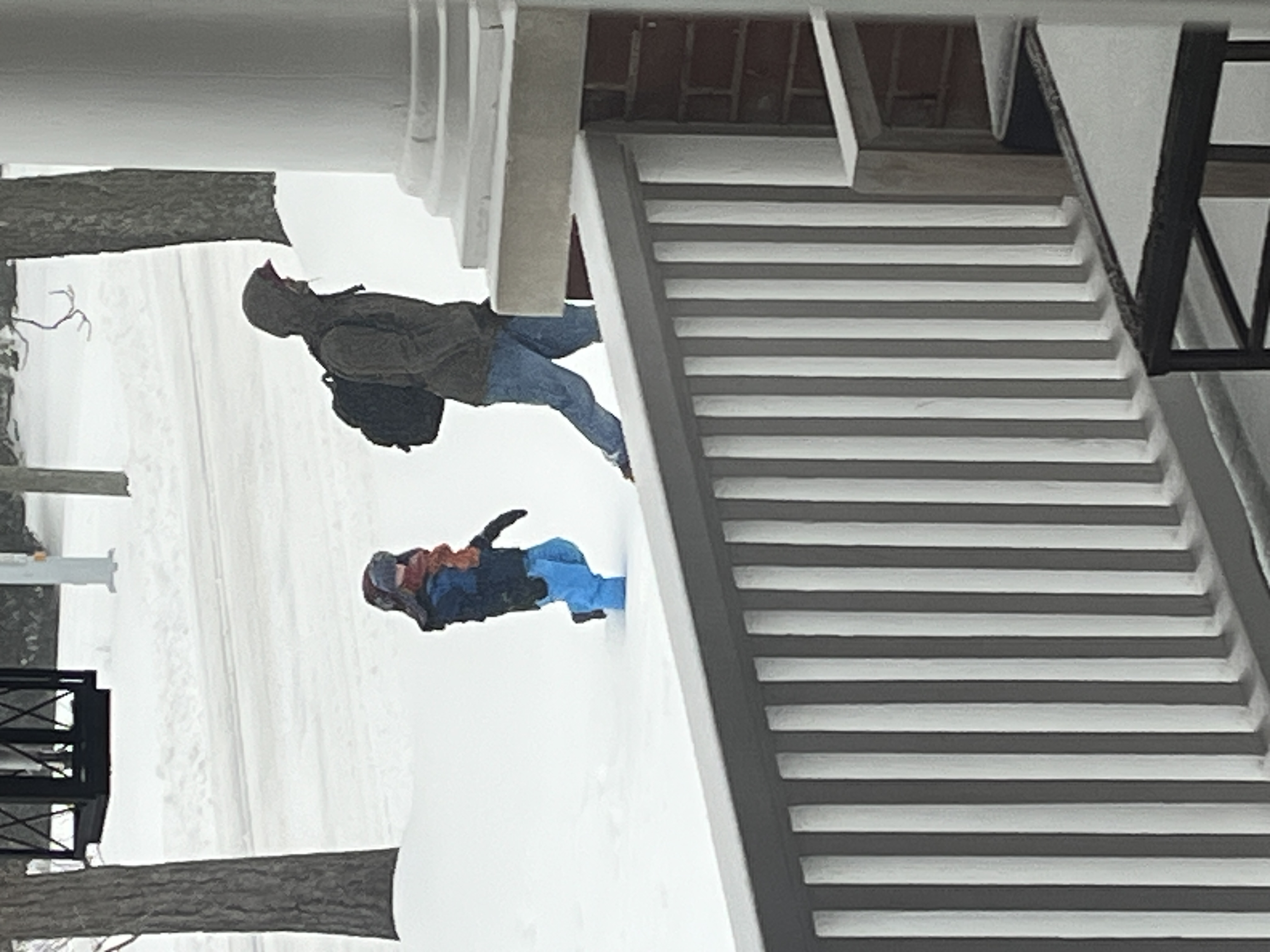
Day 1, Jan. 25: Matt Springmann and his eldest son, Felix, return home after a walk in the soft snow Sunday, Jan. 25, in Fairfax County. The quiet snowfall later transitioned into a historic ice storm that paralyzed much of the region for more than a week.

Day 3, Jan. 27: Oshi, a Pomeranian, sleeps on the back of a sofa Tuesday, Jan. 27 in Fairfax County, hoping to find a patch of sunlight. With neighborhood sidewalks blocked by impenetrable "snow-crete," the dog remains indoors with her toy, avoiding the ice and record-breaking cold.

Day 3, Jan. 27: A balaclava, gloves and two pairs of boots dry on a radiator Tuesday, Jan. 27 in Fairfax County. Repeated attempts to clear the frozen "ice-crete" yield only a few feet of progress into the driveway, forcing the resident to come inside and melt snow off his gear before the next round of shoveling.
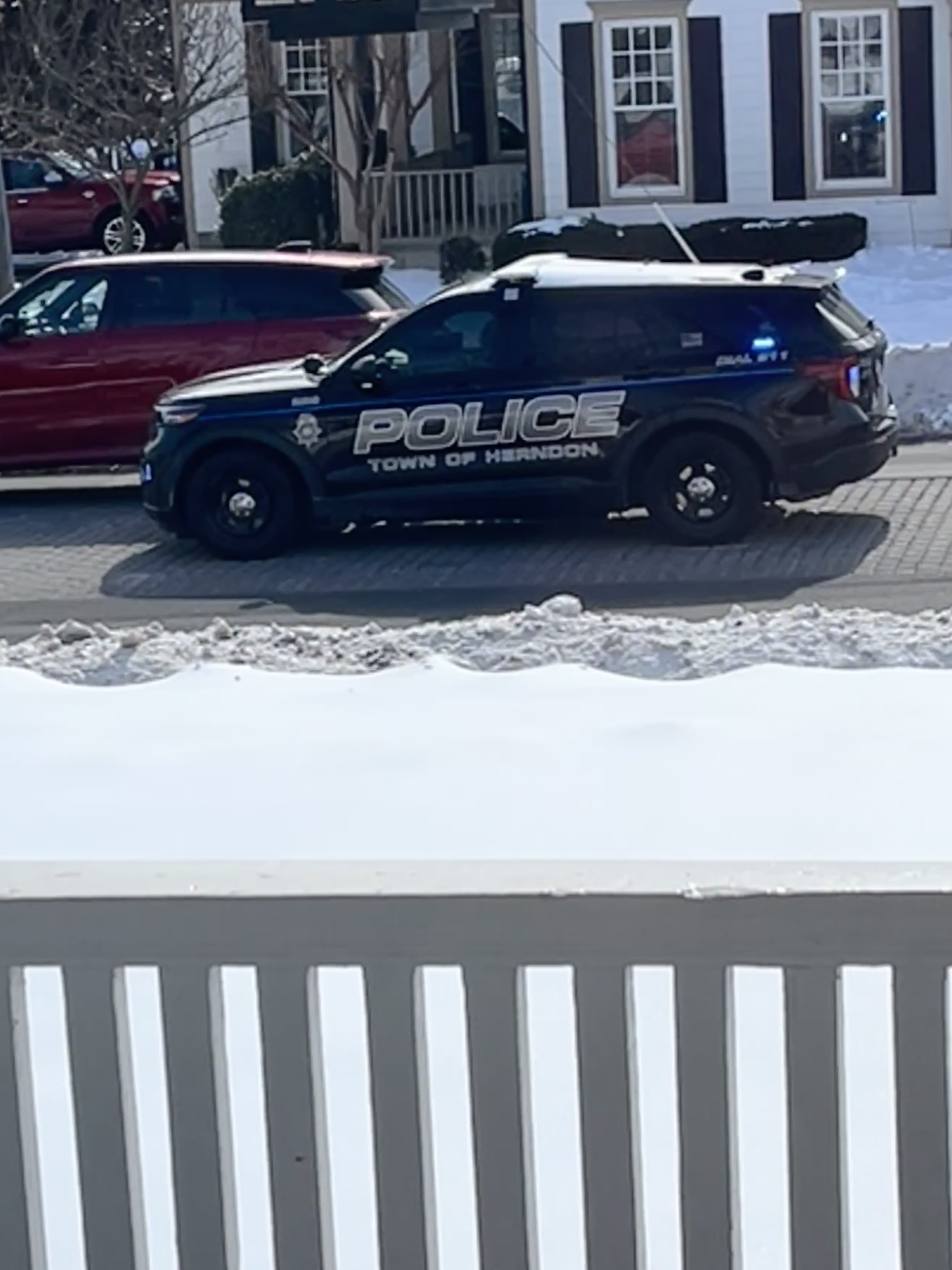
Day 6, Jan. 30: A Town of Herndon police cruiser waits at a red light with a layer of snow on its roof while the car ahead remains completely cleared Friday, Jan. 30. Failing to clear snow from a vehicle roof can create dangerous conditions for trailing drivers, especially with the region's "ice-crete.”

Day 7, Jan. 31: A hydrangea bush stands covered in ice and snow Saturday, Jan. 31 in Fairfax County. Despite the heavy accumulation from Winter Storm Fern, the hardy shrub remains upright in the subfreezing temperatures.
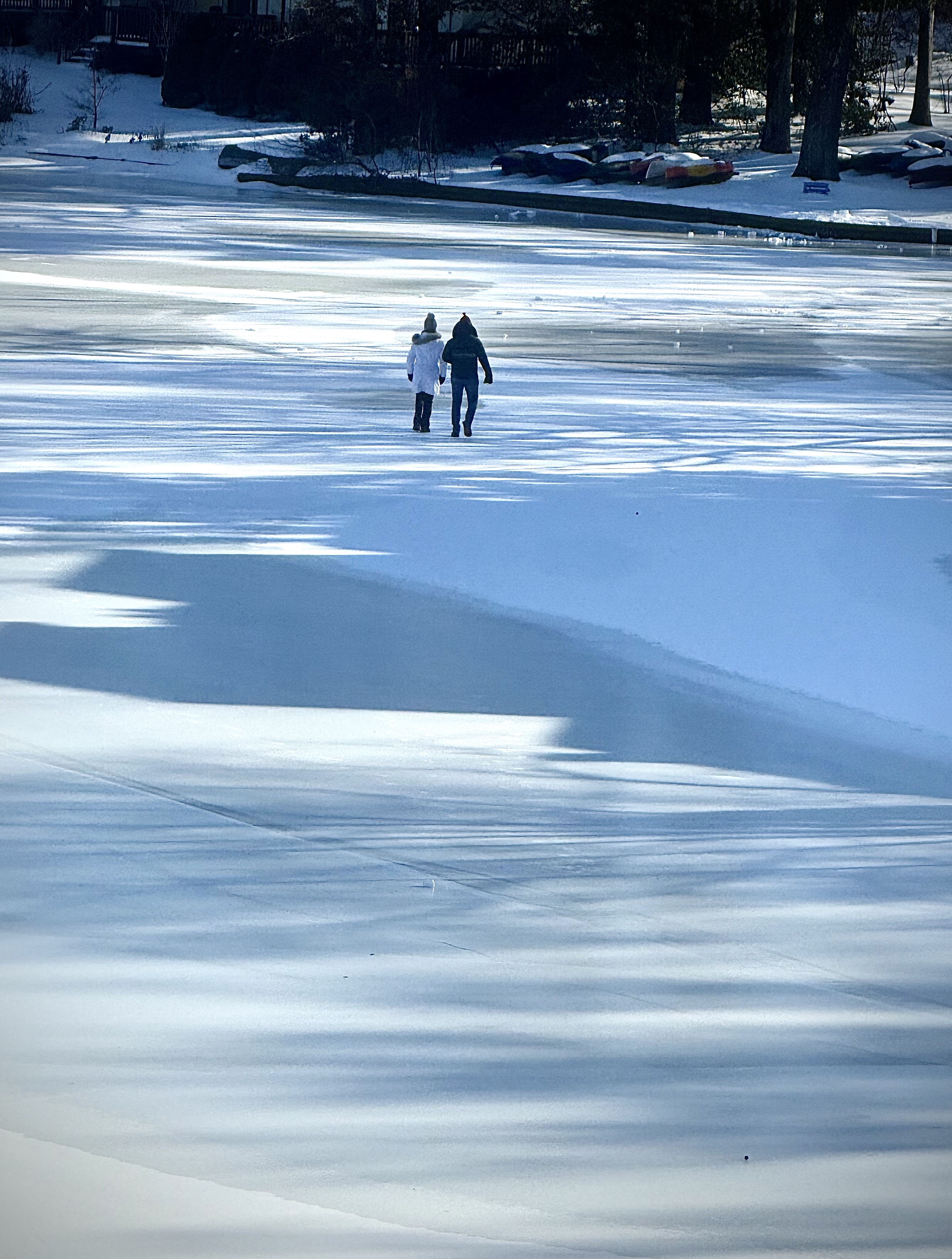
Day 8, Feb. 1: A couple walks across the frozen surface of Lake Anne in Reston, Sunday, Feb. 1. After a week of subfreezing temperatures, the ice on the lake thickened enough to support the two residents, a rare occurrence for the Fairfax County community.